Selfy, 1958
Who took the first selfie? Who coined the word? The American photographer Robert Cornelius’s self-portrait from 1839 is believed to be the earliest surviving American portrait photograph – and so, “the first selfie.” The word came much later. Researchers believe “selfie” was first used on an Australian online forum in 2002. Oxford Dictionaries chose it as Word of the Year in 2013, after its use rose 17,000 percent in a year. In its early days, the word was often spelled “selfy.”
I don’t know much more about that history. But I have a story to share – about a few photos that may be among the first selfies from Bangladesh, then East Pakistan. It is a story close to my heart.
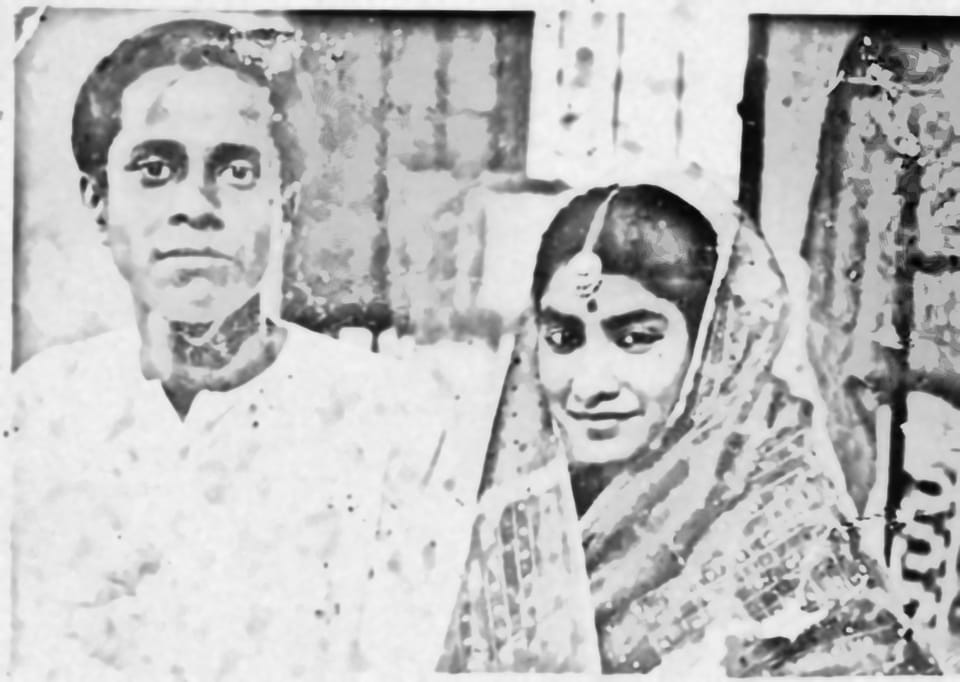
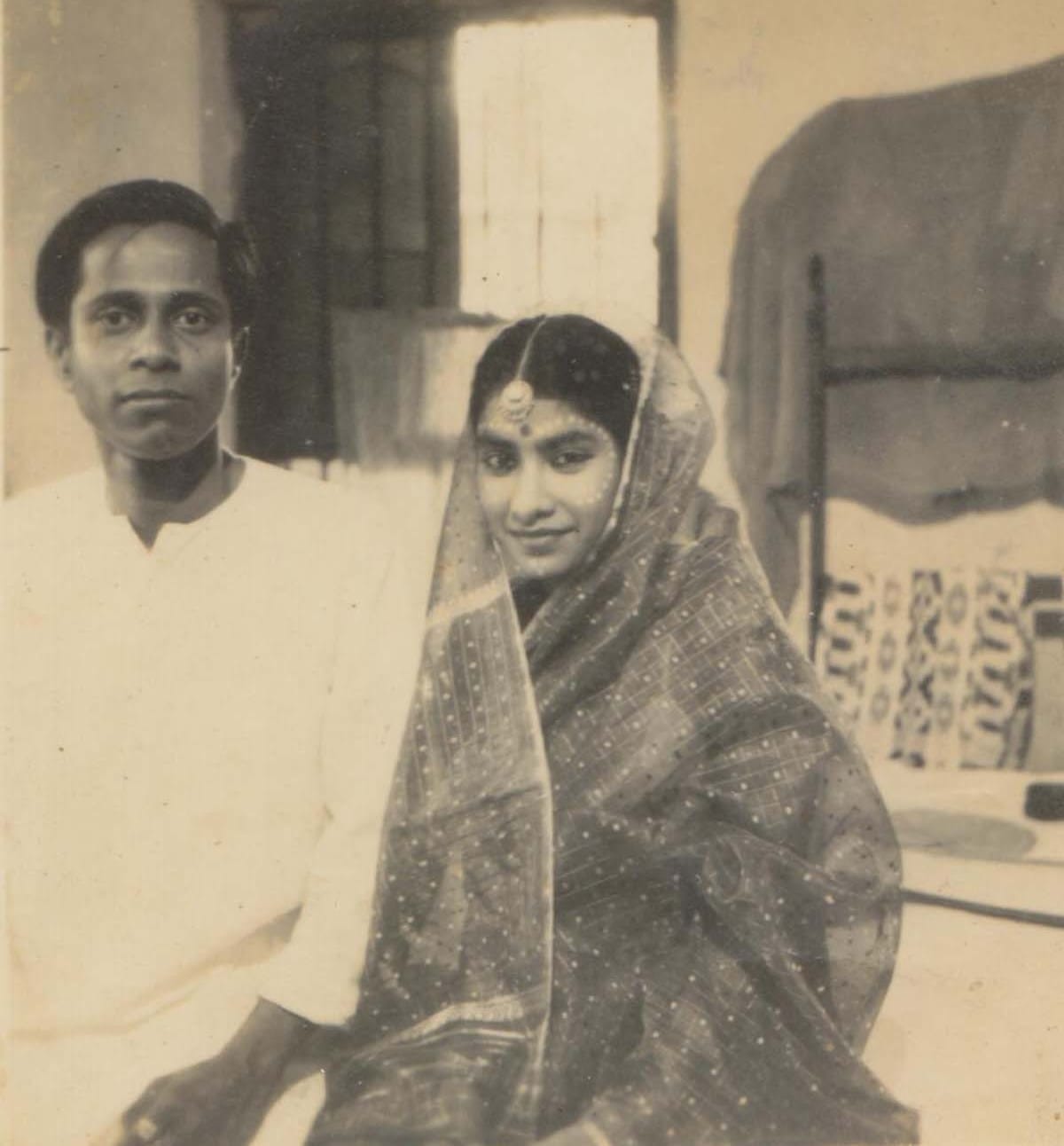
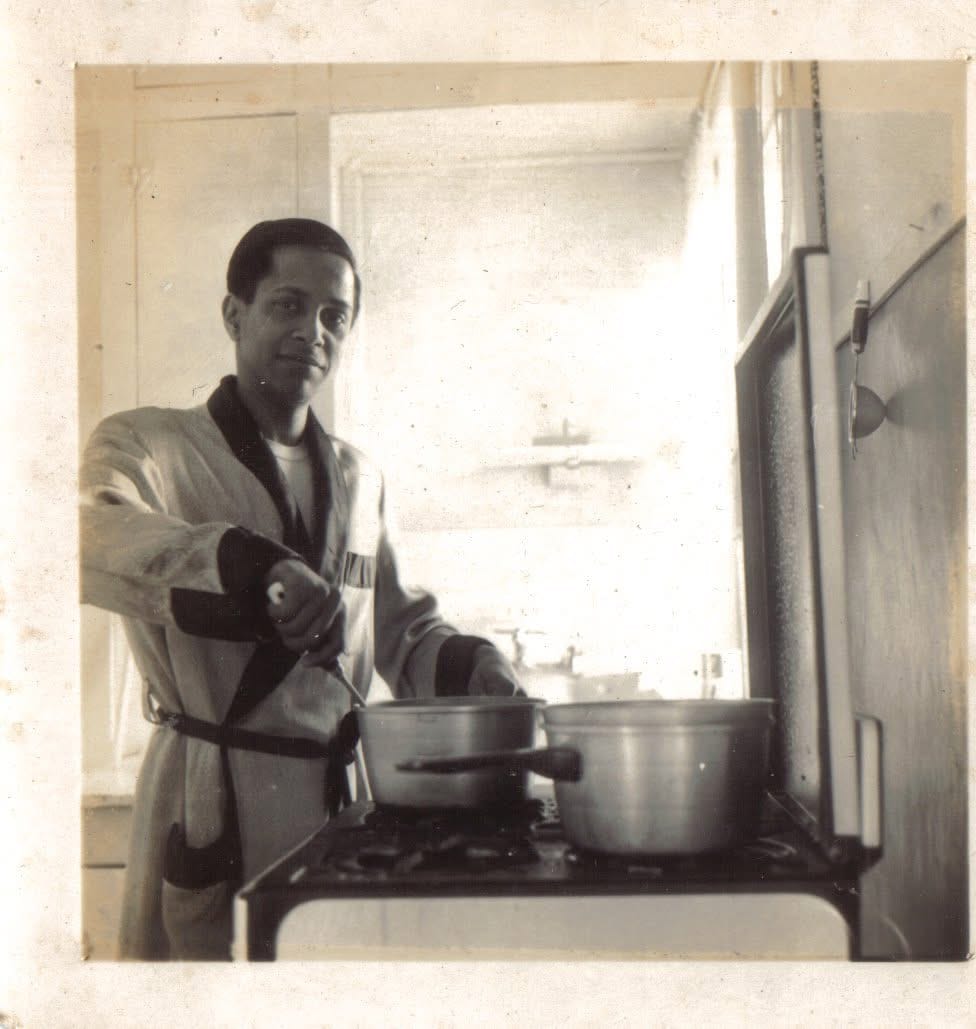
The year was 1958. A young engineer, back from the United States, was a lecturer at Ahsanullah Engineering College – now BUET – in Dhaka. He had just married. His bride was only 17, a first-year student at Eden College. And he loved his camera. He had bought it in America, and it was expensive. It had a tripod and an automatic timer. He would set it up and turn it on. The camera took a few seconds to click. In those precious seconds, he ran to stand beside his bride, so both of them would be in the picture on their wedding day.
1958 – I am talking about a very different timeline and landscape. Very few people in East Pakistan owned a personal camera. A photograph meant a trip to the studio, and it was a big event for any family. Pioneer photographer Sayeeda Khanum recalled that Dhaka in the 1950s had only two studios. Into the early 1960s, the studio portrait ruled in this country. Even in 1971, the photographer Nasir Ali Mamun had to borrow a camera from a studio to begin his work. In such a time, a young man owning a camera with a timer and a tripod was almost unheard of.
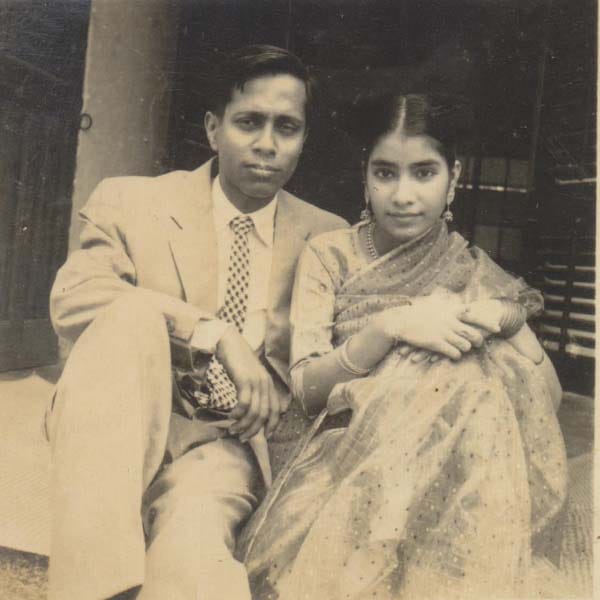
The camera captured more than a young couple. It held a moment of truth. Today, we hold up a phone and take a selfie. What should we call the picture of a man who set his camera on a tripod and ran into the frame before it clicked? An old-day selfie?
He took hundreds of pictures of his wife, of the two of them together, and later of his children, especially the eldest. Sadly, the camera was stolen during the Liberation War in 1971.
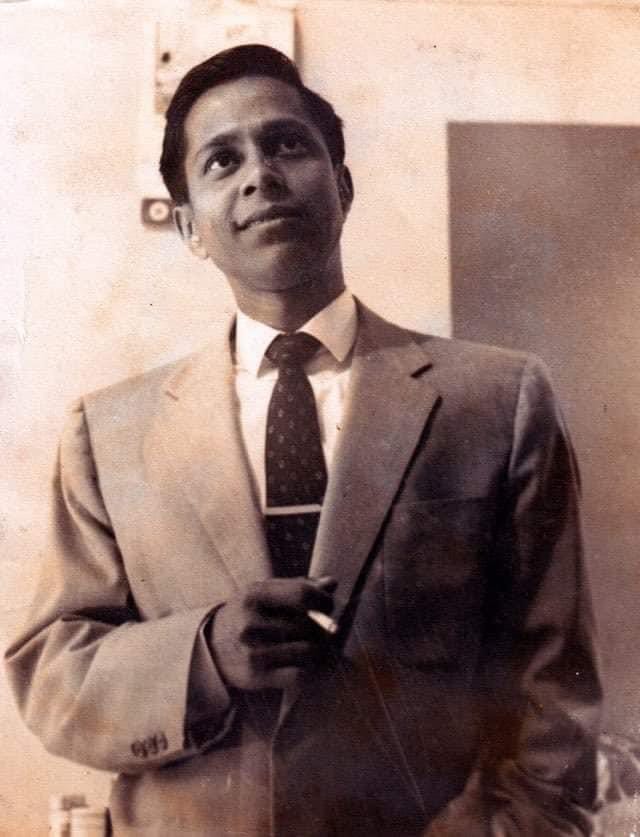
The engineer’s name was Abul Kalam Azad. My father – Abba.
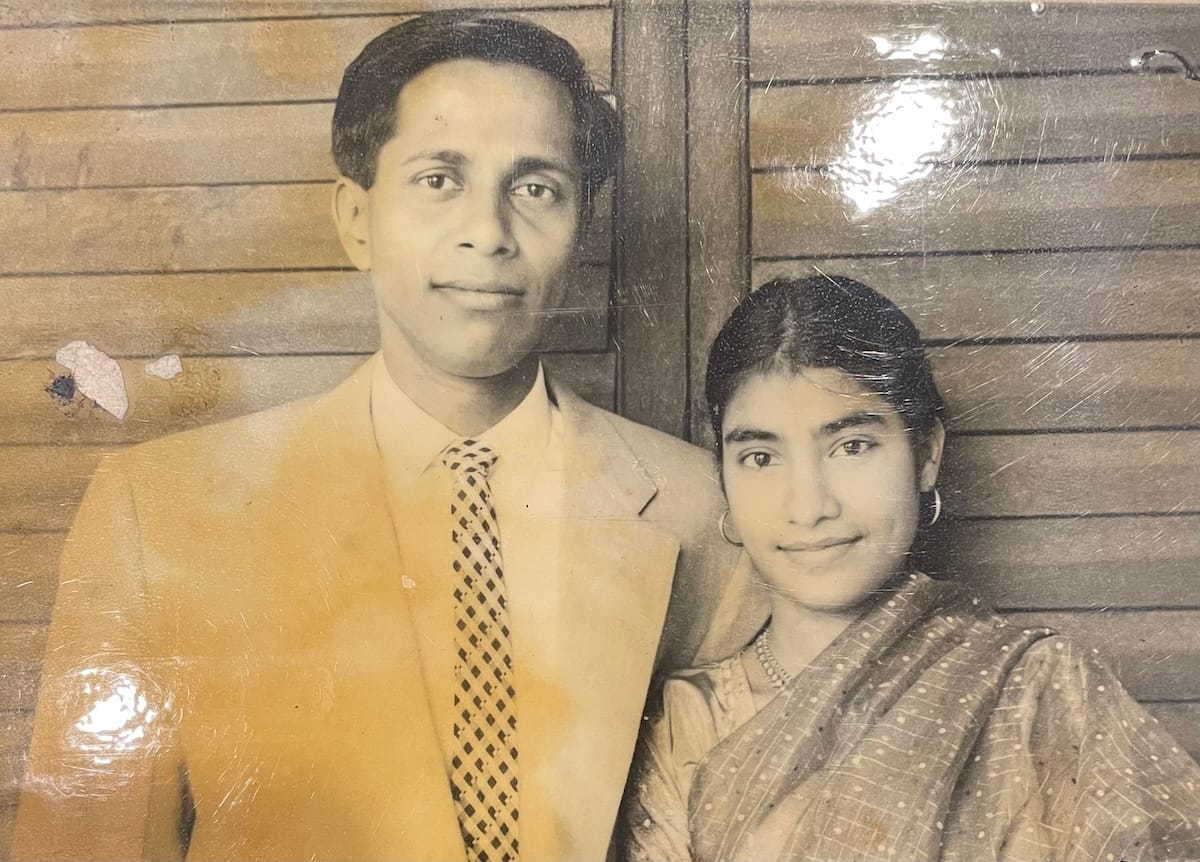
Abba got his degree in Mechanical Engineering from Ahsanullah Engineering College in 1954. He earned a Master’s from Texas A&M, came home, married, and later went back to the US for a second Master’s in Technical Education from Oklahoma State University. He taught at BUET and Dhaka Polytechnic Institute, then moved to Rajshahi Engineering College as a professor. In 1974, he became principal of Khulna Engineering College. Around 1980, he spent a year or so as principal of Chittagong Engineering College, went back to Khulna, and retired from Dhaka Engineering College in 1984.
Abba was a hell of a stylish man for his time. A romantic at heart, with no practical, materialistic foresight. He was a different breed. When most of his peers saved money or bought gold and land, he brought back a camera and an Omega Seamaster watch from America – and happily clicked pictures. Whatever money was left from his US trip, he spent on a Ford Anglia car. In the 1960s, he bought a huge refrigerator – not just a luxury then, but a rarity in any home. No house, no land, no gold, no bank balance. Once, in the US, he went to a photo studio and posed like John F. Kennedy. He told the cameraman he wanted to capture Kennedy’s aura. He had been living in his dreams.
I was born after the war. By then, the camera was gone. I do not have any pictures from my infant and toddler years. The man who photographed everyone he loved had no camera left for his youngest. I often wonder what pictures of me he would have taken.
Abba was a changed man after the war. He had come close to death more than once. After independence, our family learned that his name was on a list of intellectuals marked to be killed on December 18, 1971. Fortunately, the country won its victory two days earlier, on December 16, and that day never came for him. He survived and continued with his government job, but he never went back to his old lifestyle. He turned to religion and its teachings and chose the simplest life – a few shirts and pants, plain boiled food, sleeping on the floor or, at best, on a hard bed with no mattress. No luxuries. Anything extra, he gave away.
He could have had a very different life. In the US, his professor advised him to stay and do a PhD. He declined. Back home, he got many attractive private job offers. He was also offered a place in the West Pakistan civil service – highly prestigious at that time, a lifetime opportunity. Abba chose to stay in Bangladesh. His commitment to his country always came first.
His love and kindness for working people and the poor were legendary. He taught himself biochemic medicine and treated relatives, friends, and poor people for free.
Nine years ago this November, Abba was lying unconscious in a nursing home in New York City, struggling for his life. He left us on December 27, 2017. He was in his late eighties.
This post is my ode to him – the stylish, highly enlightened selfie man from a distant past. My sister once asked him, pointing to his wedding photo, “Abba, why were you looking so tired and tense on your wedding reception day?” Abba said that, being the only son of his father, he had to do all the preparations for his own wedding. He was very happy, but tired too. Tired – but he still ran across the room so he would not miss his own picture with his new bride. These photographs are deeply personal, and few people outside our family know they may be among the earliest selfies in Bangladesh. For us, they are a precious piece of Abba – something his family will always be proud of.
With thanks to Amma, Selima Sultana, and my sister Soheli Hossain, who gave me the history of the camera and many little details for this story. Interestingly, we three sisters share the same first name – another unusual choice by my parents. Let’s hold the naming history for another time, another day, perhaps.
References
- Library of Congress, “Robert Cornelius, Self-Portrait, 1839”: https://www.loc.gov/exhibitions/images-from-americas-library/about-this-exhibition/icons/robert-cornelius-self-portrait-1839/
- “‘Selfie’ declared word of the year 2013 by Oxford Dictionaries,” PRI: https://www.pri.org/stories/2013-11-19/selfie-declared-word-year-2013-oxford-dictionaries
- “Sayeeda Khanam,” The Daily Star: https://www.thedailystar.net/node/1946949
- “Nasir Ali Mamun and a photographer’s fifty-year quest,” The Daily Star: https://online91.thedailystar.net/life-living/news/nasir-al-mamun-and-photographers-fifty-year-quest-4189696


Member discussion