Grains of Sand

Dreams Through the Eyes of a Philosopher, a Poet, and a Filmmaker
Why do we dream? Scientists, philosophers, and all of us mere humans often wonder what shapes our dreams. Some argue that a dream is nothing but a reflection of what we see, hear, or think in our subconscious mind. Some argue that dreams have the special power of foretelling the future, that we have already seen what it could hold for us. There are different dream interpretations – from a scientific lens, from a religious lens, and from a non-believer's rational perspective. All of them lead us, really, nowhere. We resort to the explanations that align with our sensibilities and accept that a dream is something of an unexplained phenomenon we have to live with.
Dreams are intrinsically connected to my sensibilities, as there have been countless times when a dream came to me as a signal, as the exact reality of the near future, and as a resolve – an instant relief from an old, rigid pain in the dream itself, made possible by the presence of the most highly regarded figure of my religion. These experiences I rarely share, and one might look at the reality of them with a lot of skepticism. So, instead of sharing much personal detail, let us look at dreams through three different eyes: a philosopher, a poet, and a filmmaker.
The Philosopher: René Descartes and Doubt
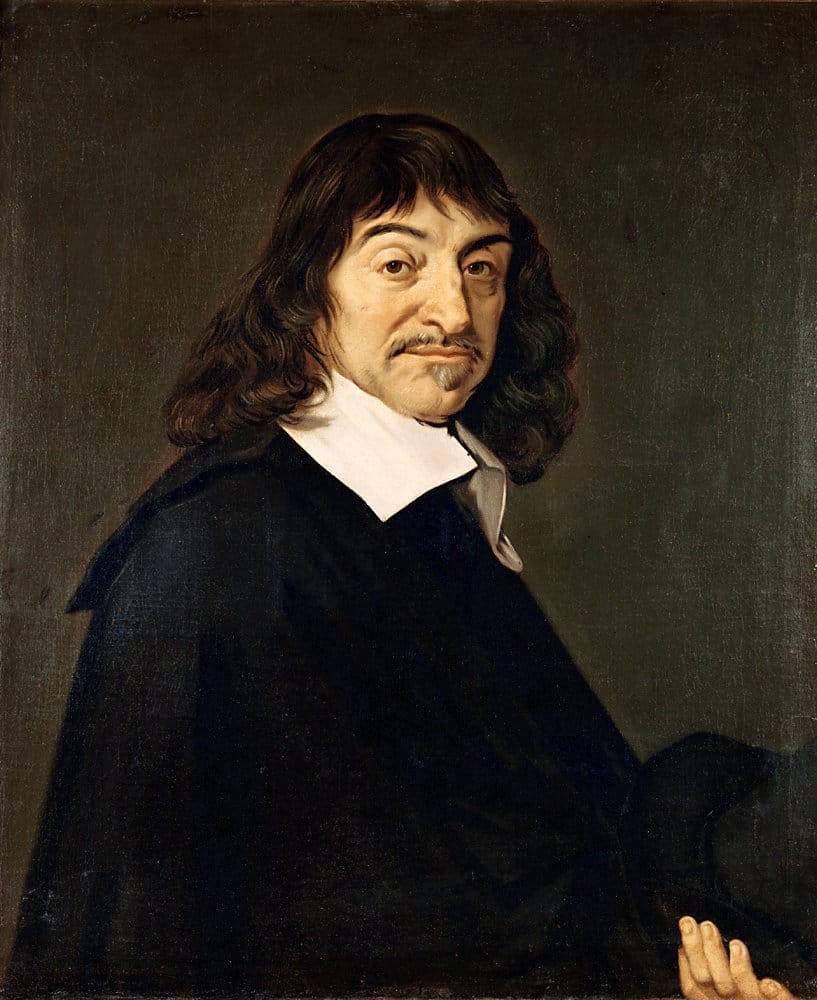
René Descartes, the great French philosopher, talked about dreams and existence in a way that changed philosophy. In his Meditations, published in 1641, Descartes describes himself sitting by his fire and looking at a paper in his hand. He was in his winter gown, and everything felt real. Then a simple thought stopped him. How many times had he dreamed this exact scene – sitting by the fire, dressed, awake – while he was actually lying in bed, asleep?
That question bothered him more than any dream or nightmare. He wondered - if our senses can fool us so completely at night, why should we trust them in the morning? Descartes did not want to know what dreams mean. He wanted to know if we can ever be sure we are not inside a dream as well – the one we consider our reality. For him, the dream was a problem to solve. It pushed him to doubt everything, until he reached the one thing he could not doubt – himself. He realized that he himself existed, because he was thinking, doubting. His famous line – "Cogito, ergo sum" – "I think, therefore I am" – became the foundation of his philosophy and later earned him the title "father of modern philosophy."
The Poet: Edgar Allan Poe and Loss

In 1849, the year he died, the famous American poet Edgar Allan Poe published a short poem called "A Dream Within a Dream." It ends with a question:
Is all that we see or seem
But a dream within a dream?
In the poem, a man stands on a shore holding grains of sand. The sand slips through his fingers no matter how tightly he holds it. He can not save even one grain. The roaring sea before him could be the cycle of life and death itself, with its tides that come and go. The grains of sand are everything that sums us up as humans – our name, fame, wealth, relationships, and actions. The "pitiless wave" takes them all, and the man can only watch and weep. It is a testament to human fragility before the vastness of the sea. For Poe, this is what a dream is. It is loss. Time, love, the people we hold close – all of it slips away.
Descartes wanted proof. Poe did not, but he questioned our very existence within a dream framework – the layered dreams concept. For him, our life is a dream in which we live and then dream again, and all is futile, as we do not have the power to save even a single grain of sand.
The Filmmaker: Christopher Nolan and Layers
Almost four hundred years after Descartes and 160 years after Poe, Christopher Nolan made Inception (2010). He took the philosopher's doubt and the poet's sadness and put them on a giant screen.
In Nolan's film, people build dreams the way architects design buildings. The protagonist, Cobb, and his team enter people's dreams and steal ideas and secrets from them. Because the characters are never sure which layer they are in, each of them carries a "totem" that works differently in a dream and out of it. Cobb's totem is a small spinning top, which once belonged to his wife. It keeps spinning when in a dream, and it stops and falls when he is awake. As such, the totem works as an indicator between dreaming and being awake.
But Cobb is not just a thief. He is also a grieving husband. His wife, Mal, got so lost in dreams that she could not distinguish between dream and reality, and he lost her. So Nolan poses both questions at once: Descartes' (am I awake?) and Poe's (what have I lost?). In the final shot, the top keeps spinning when the screen goes black. So, we, as an audience, never find out.

Conclusion
Three thinkers, three eras, three ways of looking. Descartes doubted the dream, Poe questioned and mourned it, and Nolan built it, with sadness and an open ending. All three end in the same place – with a question they cannot answer: are we living, or are we just dreaming?
For me, the questions go even further. If some people claim to see the future in their dreams, where do we go when we sleep? Is it possible that our body rests in a latent state while our active self travels into the future and returns before we wake? Can we exist in more than one reality at the same time?
No one has answered these questions, just as no one has answered the oldest one – what happens to us when we die? Maybe that is why we keep dreaming, and keep asking. Descartes' doubt, Poe's loss, and Nolan's layered dreams are just a few of the sand grains in front of this enormous, mysterious sea called life.
References
Skirry, J. (n.d.). René Descartes (1596–1650). Internet Encyclopedia of Philosophy. https://iep.utm.edu/rene-descartes/


Member discussion