A Life Unfolding
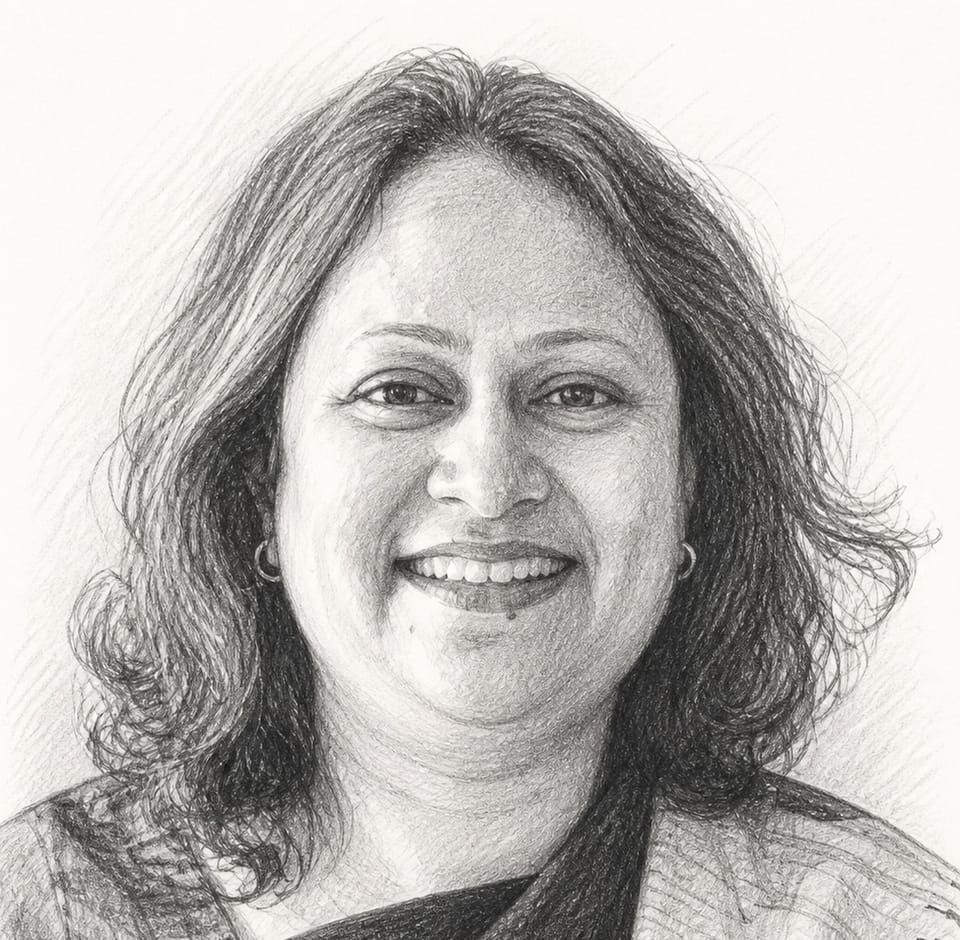
Welcome. I am Soheli Khadiza Azad - a scholar, educator, writer, and lifelong learner — a South Asian immigrant woman who has spent a life crossing borders, both geographic and intellectual. I have a PhD in Women and Gender Studies and two Master's degrees – in Higher Education Administration from Baruch College and in Women's and Gender Studies from Rutgers University. This is my space to share what I have learned, what I am still learning, and what I believe is worth saying out loud.
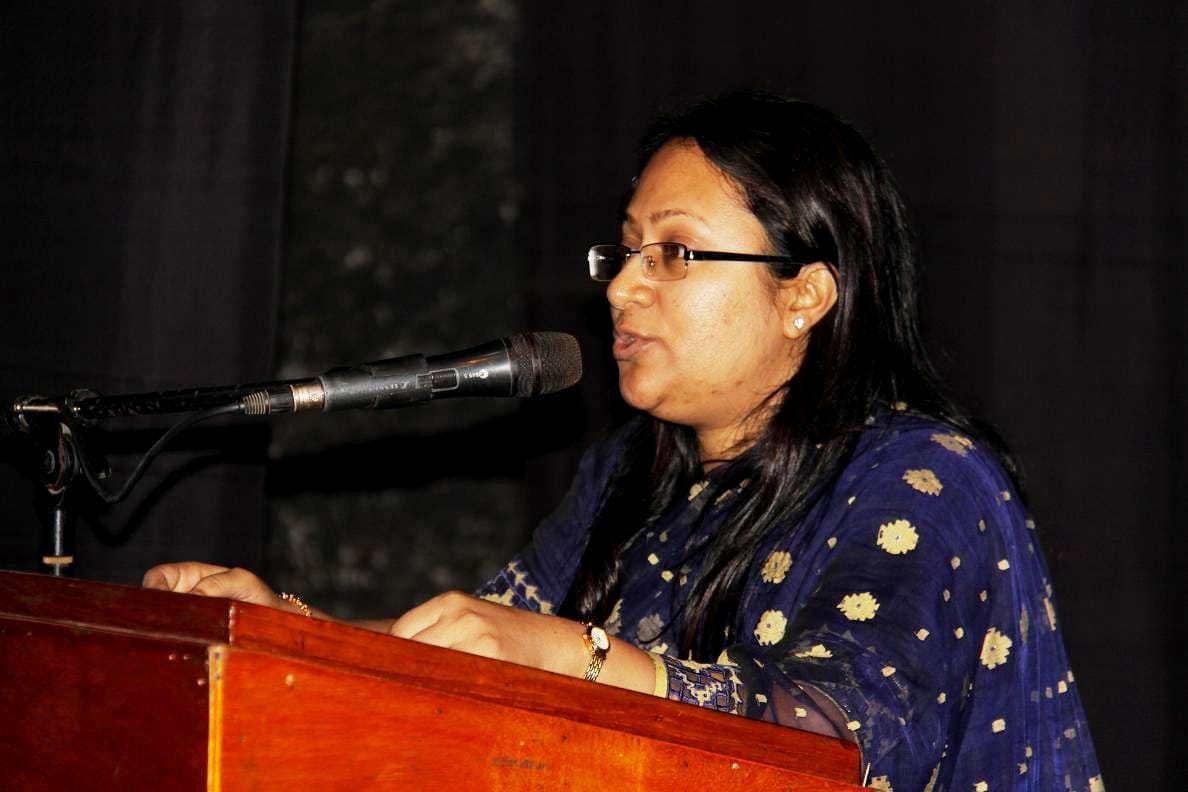
As a mother of two and a South Asian immigrant woman who transitioned back to work after a career break, I have come to see learning as a lifelong journey – an ever-welcoming host for people of all diverse backgrounds and ages.
Having completed my sabbatical and my graduate program, when I look into the future, I see myself thriving in a career dedicated to education-related work and projects, and continuing to learn from the vibrant young generations. My personal philosophy mirrors my unique life view, and my career choice is shaped by critical life events that have culminated as my areas of strength.
Personal strength is an excellent determinant of one's career choice. My strength lies in multicultural competence, gender sensitivity, and diversity awareness gained through professional and academic exposure – from being an international student, a Muslim immigrant, and a hands-on mother. My emotional intelligence, patience, and compassion – are qualities I have acquired from my experiences and are not merely fancy words for me to put in a resume or personal statement. Thus, it is important to revisit some of my life journeys to understand the reasons behind my career aspiration to get involved in education-related work and projects.
I taught undergraduate students at the Women and Gender Studies Department, University of Dhaka, Bangladesh, from 2004 to 2014. I had the opportunity to meet students from Dhaka – the capital city, and other urban cities, suburbs, and remote villages. There were a few indigenous students also. As a course teacher and student advisor, and during my three-year tenure as departmental Chair (from 2009-2012), I interacted and worked closely with students from all economic and social strata. Knowing about their aspirations and challenges made me more aware and empathetic to students with diverse background and need. With its systemic oppression and economic inequality, the world often becomes a ground for unfairness and unequal access for many students outside the classrooms. Listening about their financial hardship in the capital city, stories of rendering private tuitions to school students to manage pocket money, and struggling to secure a room in the residential halls amidst convoluted student politics were pointers to a great self-awakening as a privileged class.
The tides shifted when I visited the USA as a Fulbright scholar after the new world order post 9/11. The horrendous experience of standing in a separate and long immigration queue at Heathrow airport with my five-year-old son for solely representing a Muslim country is etched in my memories. The tensed and dejected look of the immigration officers and harsh thorough physical checkup separated me in a minute from the other privileged queue – who were considered 'safe' due to their country of origin based on religious affiliation. I had no answer to my son's question, "Mom, why do we have to stand in a different line from them?" I realized that the New York-bound flight I was about to board from Heathrow and the American dream awaited a new set of challenges for me.
As I settled down for my graduate program at Rutgers University, the anxiety and fear started to evaporate slowly. Especially my interactions with the Rutgers International Student Office were a relief. The orientation program and visit to the office, briefings on rules and regulations as an international student under a J1 visa, helped in an easy and smooth transition. The welcoming and warm office culture made me realize the significant role of such a support system for any international student visiting the USA for the first time. Emotional intelligence and multicultural competency are two vital qualities of any student advisor to address the need of such a diverse student body. I am fortunate to have acquired these two essential qualities from my experience and exposure to different countries (India, Nepal, Malaysia, Bangkok, South Africa, Netherlands).
I attended one-month leadership development training in Bangkok in 2002. The training was organized jointly by ActionAid Bangladesh (an international development organization where I worked in the Human Resource Department) and Chulalongkorn University, Bangkok (the local organizer). We made several field visits during the workshop, including a remote Bangkok village. We stayed overnight and interacted with villagers whose livelihood (fishing) was affected by the construction of a dam named "Pak Mun Dam" – the impact of development intervention. We met and talked to the sex workers from the red-light zone and the NGOs working for them. I came across many different lives and their livelihood challenges. More than sixty ActionAid employees across the globe attended the training program. It was an excellent opportunity to know people of diverse, multicultural backgrounds.
In 2004, I visited Johannesburg, South Africa, to attend Organization Development Workshop from ActionAid Bangladesh. A day-long visit to the Apartheid Museum was on the itinerary. The museum tells the history of segregation, discrimination, sub-humanization, and subjugation of Black South Africans by the White colonial power. The visit to Johannesburg's beautiful landscape and the museum was a self-revelation. I realized my blind spot and implicit bias (for categorizing South Africa as an underdeveloped country, people from impoverished look before my visit – thanks to the dominant media stereotyping of African countries!).
Later in my career at Dhaka University, I attended a one-month research workshop at the Institute of Social Studies (ISS), The Hague, Netherlands. I had the opportunity to experience European culture, albeit briefly.
The experience of interacting with people and cultures from three different continents – Europe, South Africa, and the USA – other than my South Asian upbringing has shaped my multicultural competence, which one can hardly achieve from academic degrees and training.
On a personal level, coming from a family of educators (my parents were both graduate degree holders and teachers), I was taught and made to realize the value of higher education and paving the opportunity for others who need support. My daughter was born with a congenital birth disease, and my countless sleepless nights as a caregiver made me patient and perseverant. My son had coping difficulties in his first few years in the USA. I decided to take a career break and help settle down my children. The time I spent with them offered me ample opportunity to self-reflect and be understanding and compassionate towards the need of a college-going son and a teenage daughter.
Furthermore, the knowledge and insights I acquired from the master's program in Higher Education Administration at Baruch College will guide me as I pursue education-related work and projects. Student learning outcomes are significantly dependent on effective advising and support. In any future education-related role, I will draw inspiration from theories of self-authorship and intersectionality. Self-authorship teaches students to take ownership of their knowledge, values, beliefs, and learning and claim self-identity rather than valuing the external authority of the parent, supervisor, or social traditions. I am also drawn to the developmental advising approach that moves beyond prescriptive, traditional advising – one that takes a holistic approach to student development, including exploration of life goals, problem-solving, behavioral awareness, and other social skills. Participating in the "Research for the Educational Administrator" course further enhanced my research knowledge, which I hope to continue applying in future work.
I recently had the opportunity to join rainflower.world, an excellent initiative working with young students, as an Advisor – a role I feel truly honored and privileged to take on.
Since the 2005 Heathrow airport experience, much water has flowed under the bridge. I gave up my Dhaka University job, permanently immigrated to the USA, and took time off to address my children's needs in the initial years. In 2015, we moved from Atlanta to New York by car. We had to stay overnight in a hotel in Virginia. I got off the car in a five-star hotel to inquire about the tariff. My weary look from travel and stress and perhaps my skin color made the receptionist susceptible to my affordability. He told me, "You know what, there is a motel across the street. I think it will be more suitable for you". What happened afterward is less significant here. But that day, I smiled in despair and whispered to myself, 'there is still a long way to go till we get there".
That road eventually led me to Baruch College, where I completed my Master of Science in Higher Education Administration — graduating with a 4.0 GPA, earning the Marxe Scholarship, the Stephen J. Jerome Scholarship, the Marxe Dean's Excellence Award, and induction into the Pi Alpha Alpha Honor Society. It was a homecoming of sorts: a return to the scholarly life I had built in Dhaka, now sharpened by new frameworks, new questions, and a new country. My academic journey spans two continents — a BA and PhD in Women and Gender Studies from the University of Dhaka, a Fulbright MA from Rutgers University, and now this MS from Baruch. Each degree has added a layer. Each has changed me.
My aspiration to be involved in education-related work and projects will be a step towards reaching that desired end of an equal and just society where diversity is treasured and multiculturalism is established.
FROM THE DHAKA YEARS
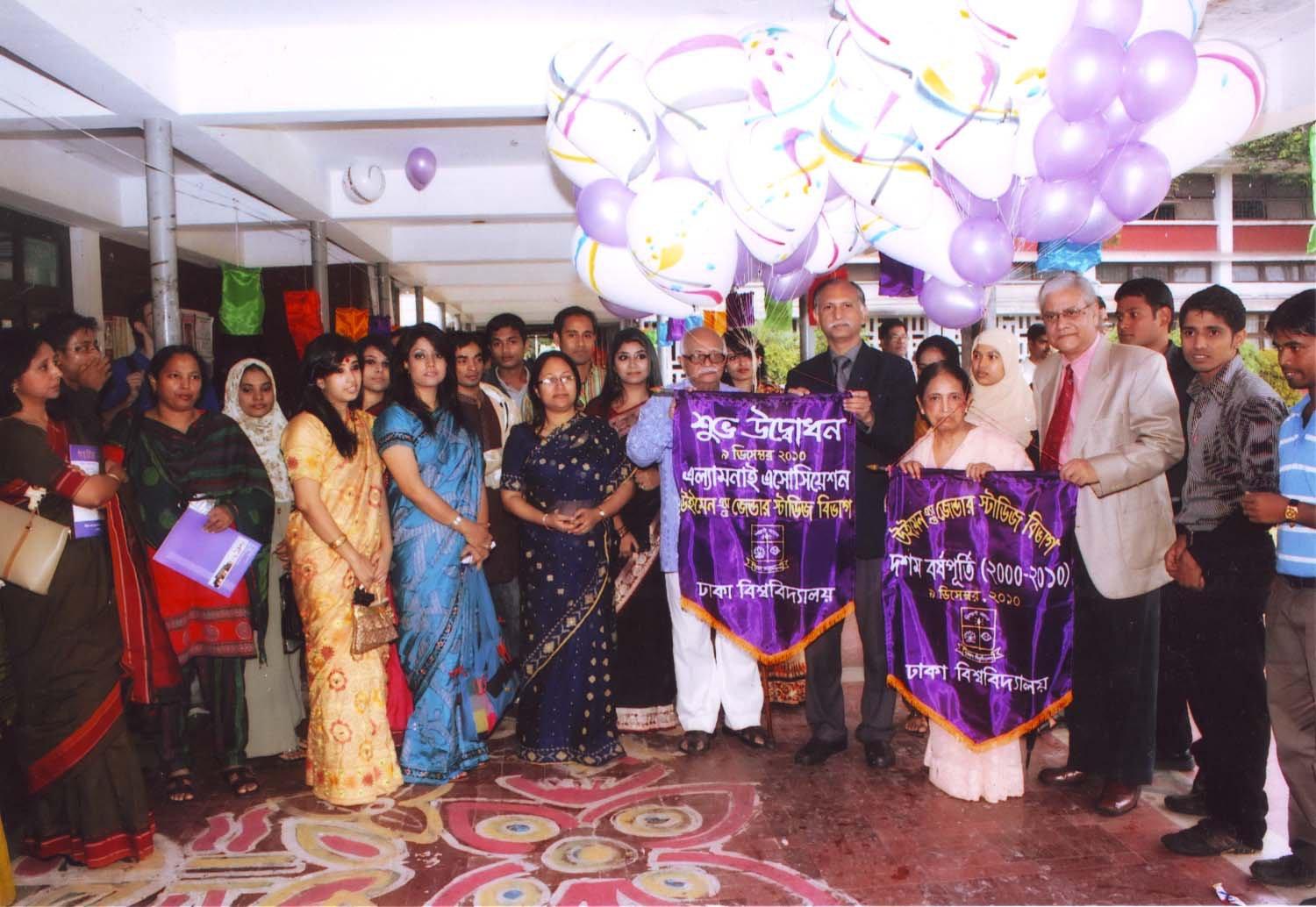
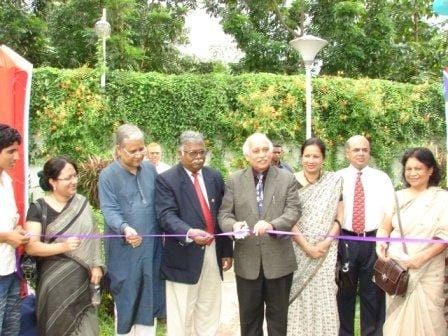
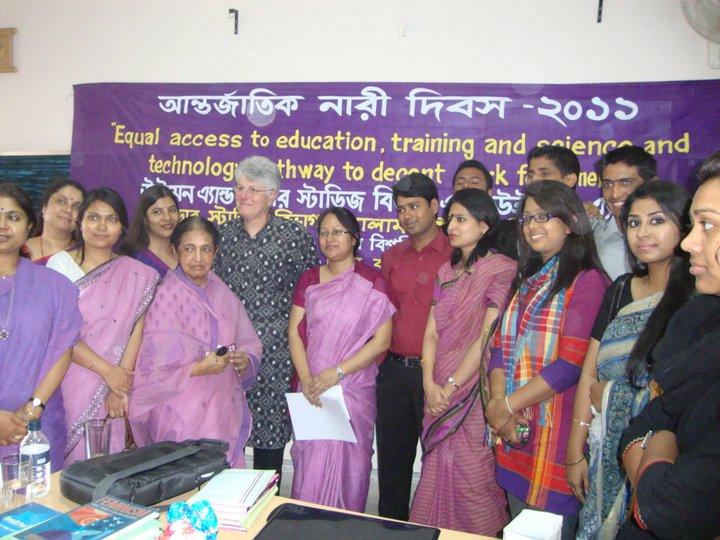

10th Anniversary celebration and Alumni Association launch, Women and Gender Studies, University of Dhaka (2010) Gender Book Fair Inauguration, in collaboration with the British Council (2008) International Women's Day, Women and Gender Studies Department, University of Dhaka (2011)
WHY THIS WEBSITE
Archiving a Life's Work — for Myself and for Others
This website was born from a simple conviction: that a rich and diverse body of experience and scholarly work should not sit in a folder on a hard drive. It should live somewhere accessible — where it can be useful to others, where it can be challenged and built upon, where it can continue to grow.
I have spent decades crossing professional, academic, and cultural borders. I have taught, researched, advised, written, raised children, navigated immigration, and sat with some of the most important questions in education and social justice. I want to document that journey — not for self-promotion, but for the same reason I have always valued education: because knowledge shared is knowledge multiplied.
This is a living archive. You will find here my academic papers from my MS program in Higher Education Administration — researched, updated with current data, and adapted for a broader readership. But you will also find much more.
This site will evolve — and so will I. New pieces will be added as I write them, new ideas as I encounter them, new findings as my doctoral research develops. It is not a finished product. It is an ongoing conversation — and you are warmly invited to be part of it.
A NOTE OF GRATITUDE
This Website Is a Gift
This website exists because of the encouragement and generosity of a dear friend — Mohammed Kabir (MJ Kabir), serial entrepreneur, tech visionary, author, and philanthropist based in Rocklin, Northern California.
MJ Kabir is the founder of pioneering technology companies including AKTIFUL, EVOKNOW, INTEVO, and SacSoft — organizations recognized for their groundbreaking work in web technologies, cloud computing, and artificial intelligence. A prolific author of dozens of books on web programming, Linux security, cloud infrastructure, and AI, he has dedicated his career not only to building businesses but to building knowledge — making complex technology accessible to professionals and students worldwide. His commitment to K-12 STEM education and his work empowering mid-size enterprises with transformative technology reflect a philosophy that echoes my own: that expertise is most meaningful when it is shared.
It was MJ Kabir who saw the value in archiving my work before I fully did — who said, in his quiet and generous way, that these stories and these ideas deserved a home of their own. This website is that home. It is also, in no small part, his gift to me. I am deeply grateful.


Pi Alpha Alpha Recipient. Marxe Dean's Excellence Award
Marxe Scholarship · Stephen J. Jerome Scholarship · GPA: 4.0
MS in Higher Education Administration, Baruch College, CUNY (2022)
MA, Women's & Gender Studies, Rutgers University — Fulbright Scholar (2006)
PhD & BA, Women and Gender Studies / Public Administration, University of Dhaka
© Soheli K. Azad soheli_azad@yahoo.com · LinkedIn