The Missing History

A Note Before You Read
This piece began as a graduate course assignment at Baruch College, where I was enrolled in PAF 9330: Introduction to Higher Education, taught by Professor Liza Ann Bolitzer. The assignment invited each student to step into the role of an author — to identify a gap in John R. Thelin's A History of American Higher Education and write an original section that could, in spirit, belong within its pages.
I chose to write about something that had quietly bothered me as a student of higher education: how little space slavery and enslaved labor get in the mainstream story of how American universities were built. I proposed my section for Chapter 9 of Thelin's book — as a way of connecting that painful past to the moral questions we still face today.
What began as a class assignment grew into something more personal. It felt important to me that this history be named and remembered, not glossed over. I am sharing it here, lightly revised and updated, hoping it reaches readers beyond the classroom who feel the same way.
In the second edition of his groundbreaking scholarly publication, A History of American Higher Education — which comprises 466 pages and a tentative 126,000-word count — John R. Thelin used the word "slavery" only once. In the book's Preface, devoid of any critical engagement, Thelin devoted a relatively small paragraph (p. xi) to Brown University's initiatives to trace its historical ties with slavery and the transatlantic slave trade. There is no mention of "enslaved labor" anywhere in the book.
Since the turn of the twenty-first century, some remarkable developments revealed that slavery, enslaved labor, and American higher education history are closely rooted in the past. Brown University, Harvard University, Rutgers University, Columbia University, and the University of Virginia have officially recognized their connections to slavery and the slave trade (Miller, 2016; Fuentes, 2016; Ireland, 2011). Georgetown University set itself apart for the sheer scale of its 1838 sale of 272 enslaved people to pay off institutional debts (Rothman, 2018; Swarns, 2016). In recognition of the undeniable relationship between the history of higher education and slavery, and to fill this historical void, this paper proposes a section titled "The Debt Beneath the Degree" to be included in Thelin's book.
The proposed section fits into two possible areas. Chapter 2, Creating the "American Way" in Higher Education: College-Building, 1785 to 1860, discusses the "new national period." Many diverse institutions emerged with finance and curricular innovations that paved the way for the more Americanized college and student life we see today. Sadly, the contributions of enslaved and free labor behind these developments remained untold. The proposed section fits as the concluding section of Chapter 2 to integrate this missing history. However, it comes with one fundamental problem. Thelin's approach followed a strict chronology of time and events divided into nine chapters. Except in Chapter 1 and Chapter 9, and a few other places, Thelin hardly drew connections between past historical strands and present facts and debates. A deviation at this point would disrupt the tone and symmetry of his work. The last chapter, A New Life Begins? Reconfiguring American Higher Education in the Twenty-First Century, briefly takes stock of higher education since 1900 and details some opportunities and challenges of the present time. The following proposed section, "The Debt Beneath the Degree," therefore suits as the last section — before the "Conclusion" — in Chapter 9, the concluding chapter.
The Debt Beneath the Degree
In 2003, President Ruth Simmons appointed a Steering Committee on Slavery and Justice (SCSJ) to unearth Brown University's historical relationship to slavery and the slave trade. The findings of the three-year study were deeply disturbing. Brown University was a direct beneficiary of the pervasive slavery economy that dominated the Rhode Island economy. Following President Ruth Simmons's path, then-President Drew Gilpin Faust on March 30, 2016, at a Radcliffe Institute event, officially recognized Harvard's participation in racial bonded labor from the 1700s until emancipation in 1783. President Faust's admission grew from an undergraduate research project supervised by History Professor Sven Beckert. The report found that three Harvard presidents had enslaved people, and that enslaved labor contributed to the success of Harvard's early presidents and private benefactors (Miller, 2016; Ireland, 2011).
Brown University and Harvard University's histories reflected the country's prevailing socio-economic structure. The forced transportation of African people to the United States as enslaved people beginning in 1619 opened the floodgates of forced servitude and exploitation of the displaced Africans. The inhumane labor and exploitation of enslaved Black people fueled the booming economy, especially the cotton industry, in the late eighteenth century. From the economy to education, those in power normalized slavery and the slave trade. The 1838 sale of 272 enslaved Africans by Jesuit priests who founded and ran Georgetown University supports this claim.
Georgetown's finances depended on several Jesuit plantations in Maryland, where nearly 300 enslaved people worked. Due to declining revenue, Rev. Thomas F. Mulledy, the then-president of Georgetown, arranged to sell 272 enslaved Black people in 1838. He used the sale proceeds — worth approximately $3.3 million in 2016 dollars — to pay off the institution's debts. Influential Jesuit priests facilitated the sale, the international Catholic organization in Rome approved it, and Henry Johnson, a member of the House of Representatives and a landowner in Louisiana, finalized the deal. Georgetown's growth was built on the back of slavery, with direct involvement from powerful state actors who promoted racial subjugation.
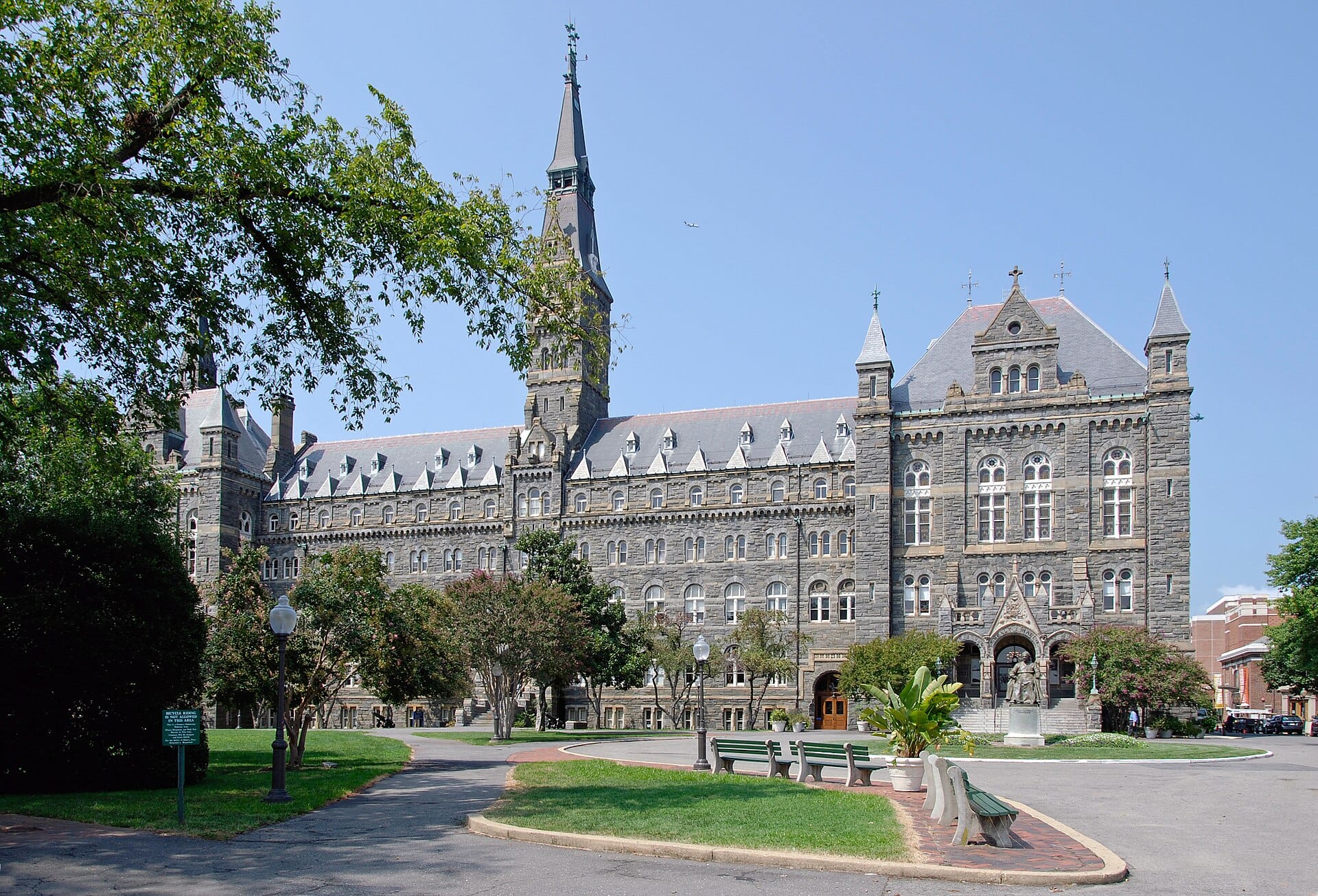
The list of institutions with ties to the enslavement and degradation of African American communities is far from exhaustive. In 2012, the University of Virginia discovered sixty-seven grave shafts near the University Cemetery. Archaeologists suspect the site contained the remains of "servants" — a common euphemism for enslaved African Americans. Research conducted at Columbia University from 2015 to 2016 evidenced its close ties to slavery dating to 1754, when it operated as King's College. Of the ten presidents who served between 1754 and the end of the Civil War, at least five enslaved people (King's College and Slavery, n.d.). Rutgers University depended on enslaved labor and the slave trade for its very existence. A 2001 Yale study showed how Yale University was sustained by slave-trading money (Fuentes, 2016). Washington and Lee University sold 50 enslaved people in 1825 to raise funds and construct a new campus building. The College of William & Mary has also acknowledged its connection to enslaved labor (Forson, 2020).
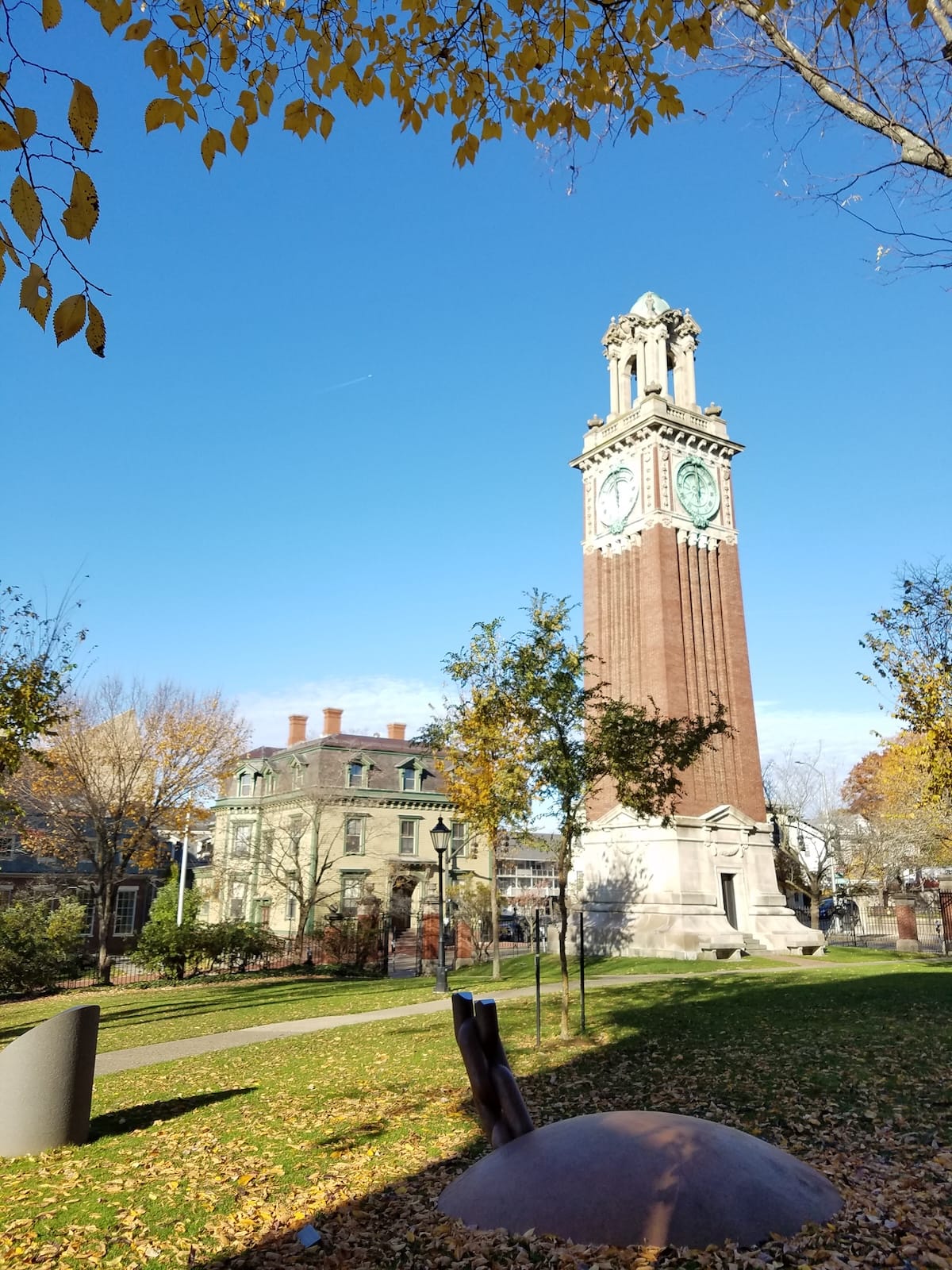
These acknowledgments raise the question of institutional morality and reparations. Georgetown University has begun a reconciliation process with descendants' family members in the presence of the Society of Jesus. On April 18, 2017, the University and the Jesuit Society apologized to the descendants. In October 2019, the University announced raising $400,000 a year to support their families. The University also offers preferential admission to family members in its programs. Brown University's Steering Committee report led to the creation of a Slavery Memorial by American artist Martin Puryear. The University also established the Center for the Study of Slavery and Justice (CSSJ) in the 2012–2013 academic year to advance scholarship on slavery and social justice.
Similarly, Harvard University memorialized its relationship to slavery with a black slate plaque inscribing the names of enslaved persons who worked in the households of two Harvard presidents during the eighteenth century. The plaque was affixed to the exterior wall of the Harvard president's home. In November 2019, Harvard undertook a comprehensive initiative to encourage research on its connections to slavery. In 2009, the College of William & Mary formed "The Lemon Project: A Journey of Reconciliation" to research its ties to slavery. Rutgers University renamed campus buildings in honor of Sojourner Truth, who was once enslaved (Forson, 2020).
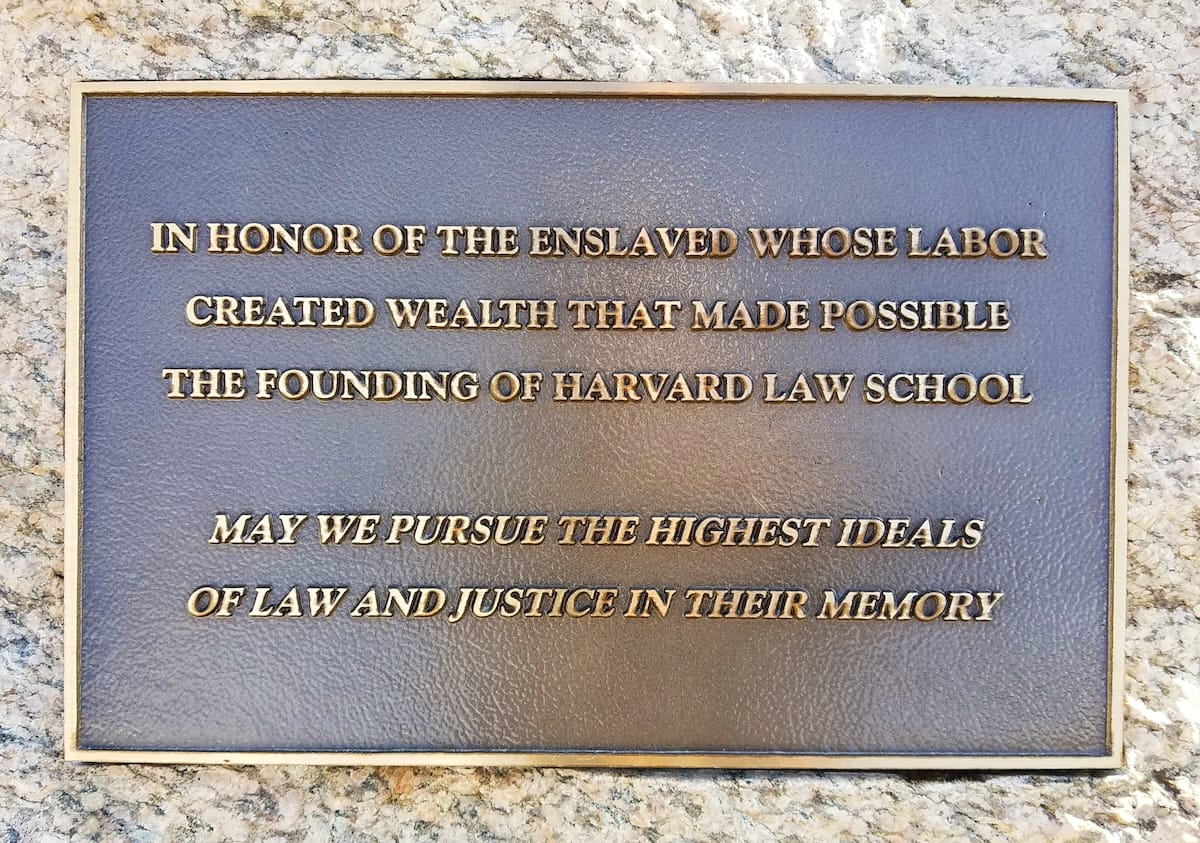
A note for readers: This paper was originally written in 2020 as part of a graduate course at Baruch College. Since then, the landscape of institutional reckoning has continued to evolve. Most notably, in April 2022, Harvard University announced a landmark $100 million commitment to address and redress its historical ties to slavery — one of the most significant financial pledges by any university on this issue to date. This development, and others like it across higher education, only deepen the argument this paper makes: that the missing history is no longer just a scholarly gap. It is becoming a moral and financial reckoning that institutions can no longer defer.
These institutions have demonstrated their moral responsibilities through dedicated committees on slavery, websites, video series, publications, and links to resources and parallel projects at other universities — all part of their ongoing engagement and research.
Conclusion
Institutions began reckoning with their past legacy and doing some genuine soul-searching around 2003. Thelin published the second edition of his book in 2011. He chose — whether by accident or by design — not to integrate the landmark historical revelations that had emerged by then. However, his brief mention in the Preface offers a glimmer of hope for institutional renewal and rediscovery. Thelin's book stands out as an invaluable document of higher education's history, rich with historical data, facts, anecdotes, and memoirs. One can only hope that out of his moral and ethical obligations as a researcher, scholar, and historian, Thelin will address this pertinent missing history in a future edition of his book.
References
A History of American Higher Education, 2nd Edition word count and more. (n.d.). Retrieved December 03, 2020, from https://www.readinglength.com/book/isbn-142140267X
Clarke, M., & Fine, G. (2010). "A" for Apology: Slavery and the Collegiate Discourses of Remembrance—the Cases of Brown University and the University of Alabama. History and Memory, 22(1), 81–112. doi:10.2979/his.2010.22.1.81
Estrada, I. (2020, September 16). Welcome, and a Call to Action. Retrieved December 03, 2020, from https://www.legacyofslavery.radcliffe.harvard.edu/announcements/welcome-and-a-call-to-action
Forson, T. (2020, February 12). Enslaved labor built these universities. Now they are starting to repay the debt. Retrieved December 03, 2020, from https://www.usatoday.com/story/news/education/2020/02/12/colleges-slavery-offering-atonement-reparations/2612821001/
Freeman, M. T. (n.d.). Post-1865: Columbia and the Legacy of Slavery. Retrieved December 03, 2020, from https://columbiaandslavery.columbia.edu/content/post-1865-columbia-and-legacy-slavery
Fuentes, G. (2016). Scarlet and Black. In Scarlet and Black. Rutgers University Press.
Harvard and the Legacy of Slavery. (n.d.). Retrieved December 03, 2020, from https://www.harvard.edu/slavery
Ireland, C. (2011, November 18). Harvard and Slavery. Retrieved December 04, 2020, from https://www.legacyofslavery.radcliffe.harvard.edu/ideas-news/harvard-and-slavery
John, T. R. (2020, July 22). Colleges and Racial Reckoning. Retrieved December 02, 2020, from https://www.insidehighered.com/views/2020/07/27/colleges-should-face-racism-past-well-erase-it-opinion
King's College and Slavery. (n.d.). Retrieved December 05, 2020, from https://columbiaandslavery.columbia.edu/content/1-kings-college-and-slavery
Lockhart, P. (2019, August 16). How slavery became America's first big business. Retrieved December 01, 2020, from https://www.vox.com/identities/2019/8/16/20806069/slavery-economy-capitalism-violence-cotton-edward-baptist
Lynch, M. (2016, September 23). Slavery on campus – recovering the history of Washington College's discarded slaves. Retrieved December 02, 2020, from https://www.theedadvocate.org/slavery-campus-recovering-history-washington-colleges-discarded-slaves/
Miller, Y. (2016, April 14). Harvard leadership comes to terms with slave history. The Boston Banner. doi:https://remote.baruch.cuny.edu/login?url=https://www-proquest-com.remote.baruch.cuny.edu/docview/1783693777?accountid=8500
Mwamba, J. (2018, April 07). 'We Built This' highlights U.S. gains from slavery, from plantation labor to the construction of the White House. Retrieved December 01, 2020, from https://www.nydailynews.com/news/national/built-highlights-slaves-contributions-u-s-article-1.3803543
Rothman, A. (2018). Slavery and institutional morality at Georgetown University: Reply to Nelson. British Journal of Sociology, 69(3), 552–559. doi:https://doi-org.remote.baruch.cuny.edu/10.1111/1468-4446.12600
Swarns, R. (2016, April 16). 272 Slaves Were Sold to Save Georgetown. What Does It Owe Their Descendants? Retrieved December 01, 2020, from https://www.nytimes.com/2016/04/17/us/georgetown-university-search-for-slave-descendants.html
Swarns, R. (2019, October 30). Is Georgetown's $400,000-a-Year Plan to Aid Slave Descendants Enough? Retrieved December 05, 2020, from https://www.nytimes.com/2019/10/30/us/georgetown-slavery-reparations.html
Thelin, J. R. (2011). A history of American higher education. Baltimore: Johns Hopkins University Press.
Wolfe, B. (n.d.). Unearthing Slavery at the University of Virginia: Recent discoveries raise new questions about the past. Retrieved December 05, 2020, from https://uvamagazine.org/articles/unearthing_slavery_at_the_university_of_virginia


Member discussion